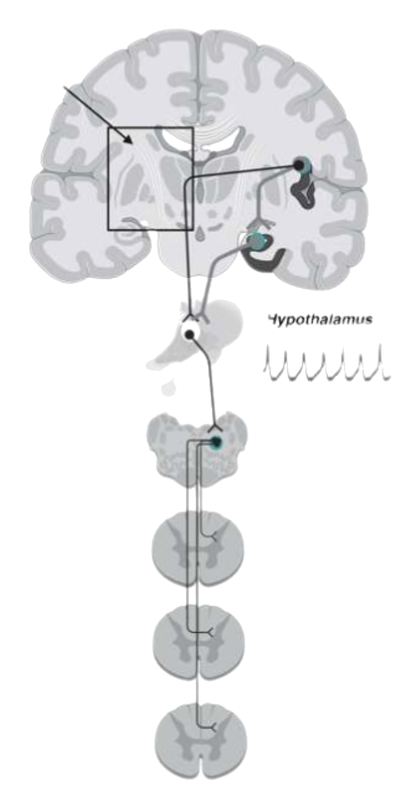
Blood pressure and pulse
In any posture, especially standing. This is where lightheadedness, syncope, and orthostatic intolerance begin.
Patient information
The ANS is the division of the nervous system that regulates the involuntary functions of the body. It is invisible, and that is why it is so often missed.
In any posture, especially standing. This is where lightheadedness, syncope, and orthostatic intolerance begin.
Breathing, gut motility, urinary function, and sexual function.
Sweating and the temperature of the hands and feet: what thermography makes visible.
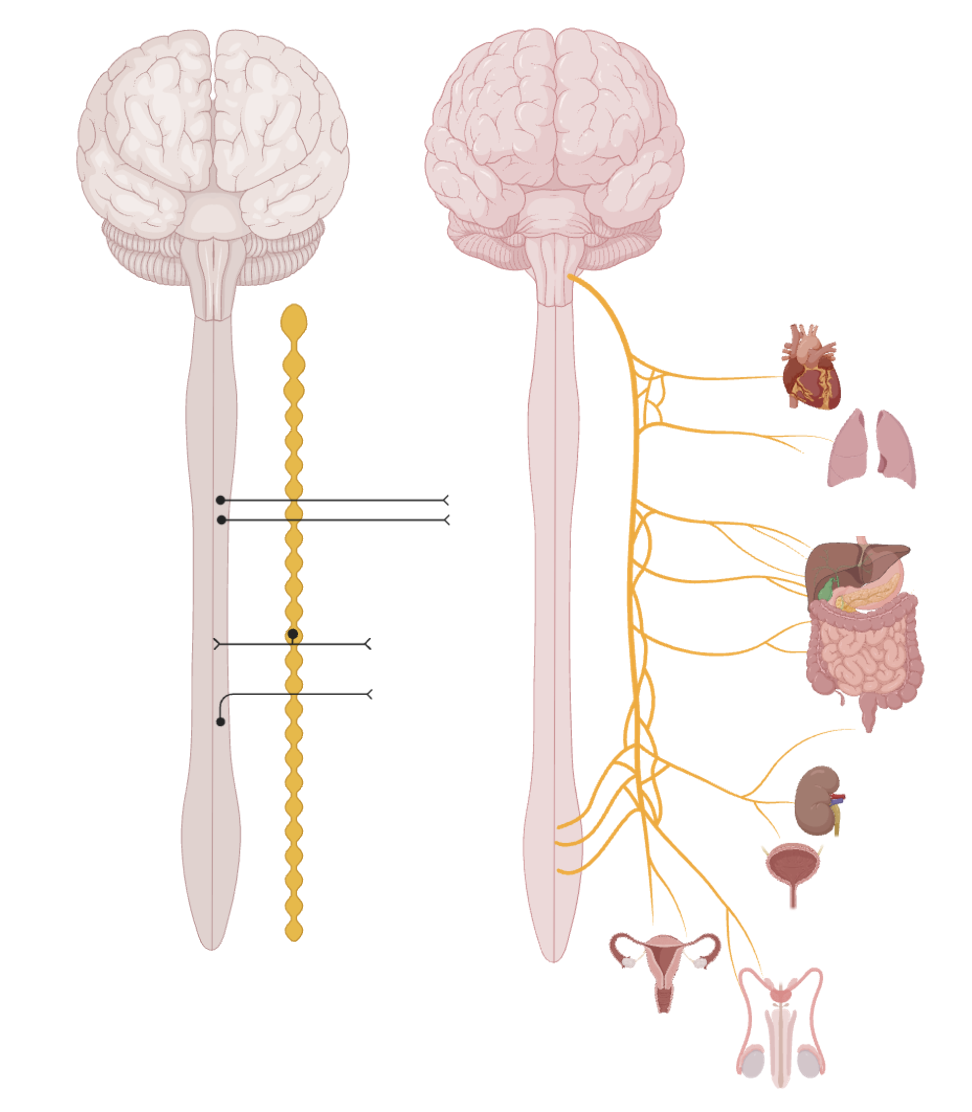
Division of the autonomic nervous system: paravertebral sympathetic chain (left) and visceral innervation (right).
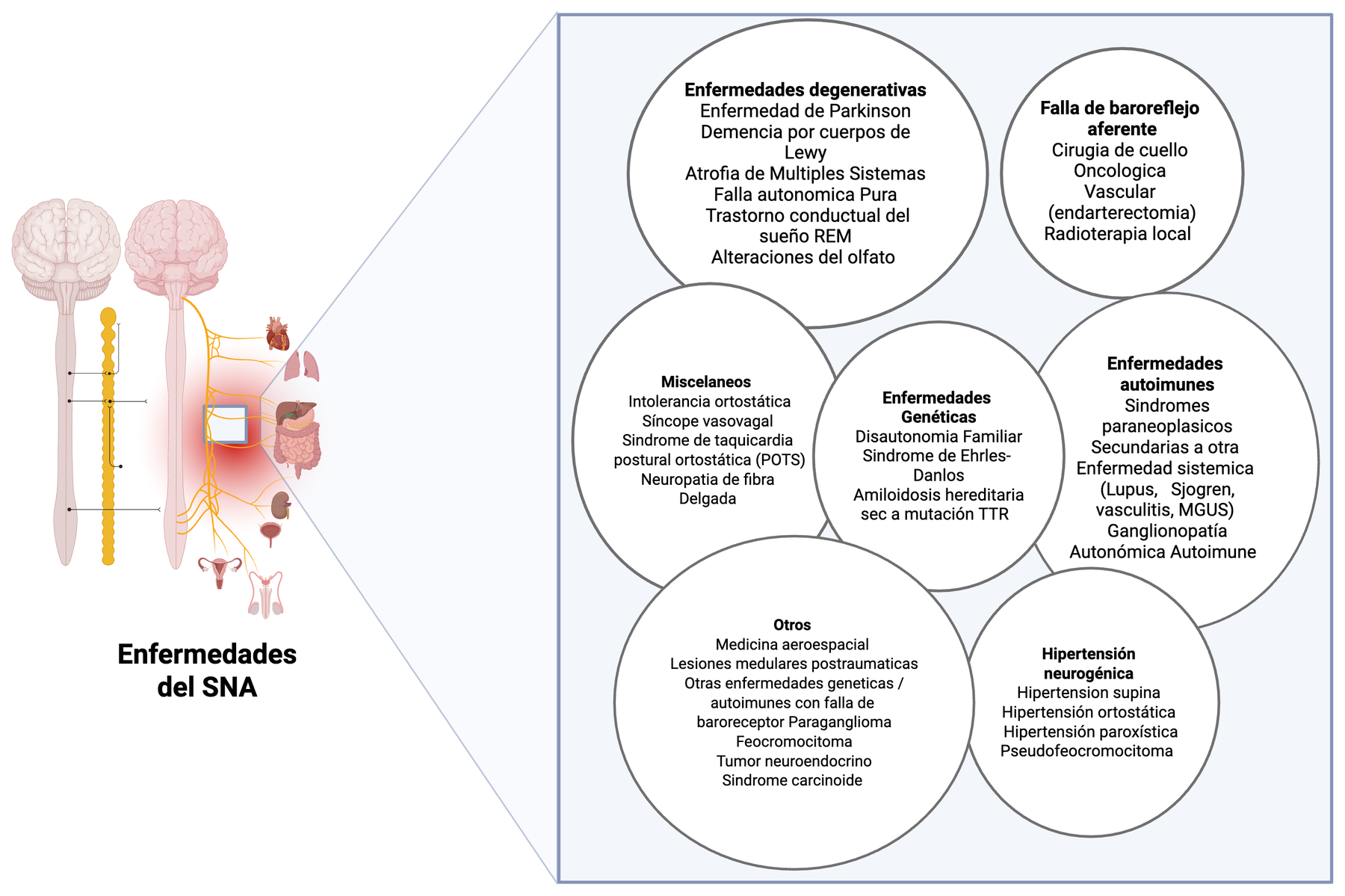
Map of ANS diseases: degenerative, genetic, autoimmune, baroreflex failure, neurogenic hypertension, and miscellaneous. Santa Fe Laboratory.
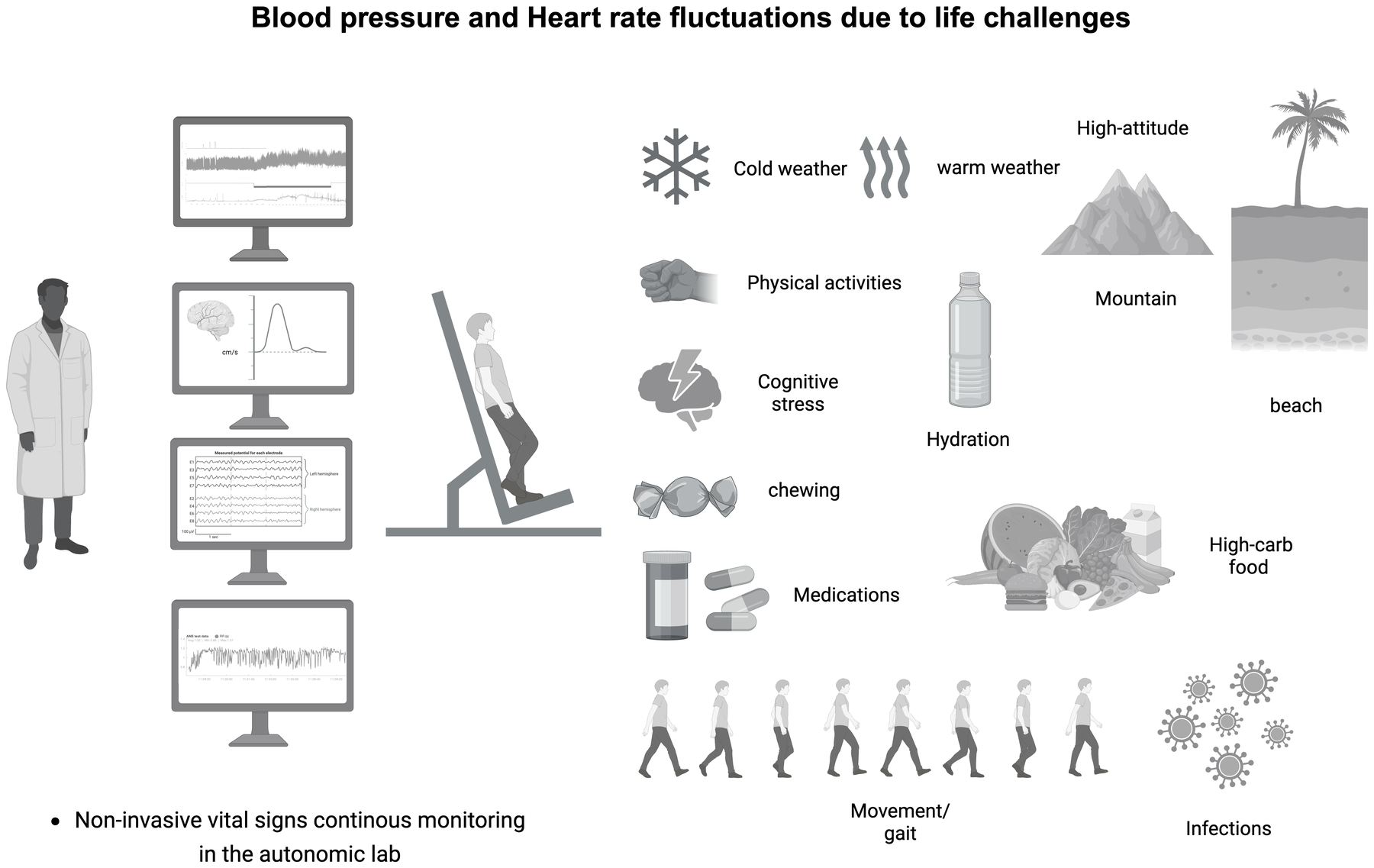
Factors that modify blood pressure and heart rate. That is why the laboratory monitors continuously and non-invasively during the challenges of daily life.
When this system fails, blood pressure and pulse can swing on standing (orthostasis). The body may not adapt well to standing, exercise, meals, heat or cold, or cognitive and emotional stress.
Children, adolescents, and adults. It may follow an infection (including COVID-19), appear in Parkinson’s disease and other synucleinopathies, in autoimmunity, in diabetes, or without a cause yet. Age does not rule it out.
You are not overthinking this. You may have been told it is only stress or anxiety, and you feel there is more to it. We take seriously what is often missed: chronic fatigue, lightheadedness, tachycardia or palpitations, and brain fog. Dysautonomia is a real condition, and your symptoms matter.
The laboratory’s 2026 criteria for when an autonomic evaluation is indicated. Red is not an emergency-department alert; it means testing is indicated from the start.
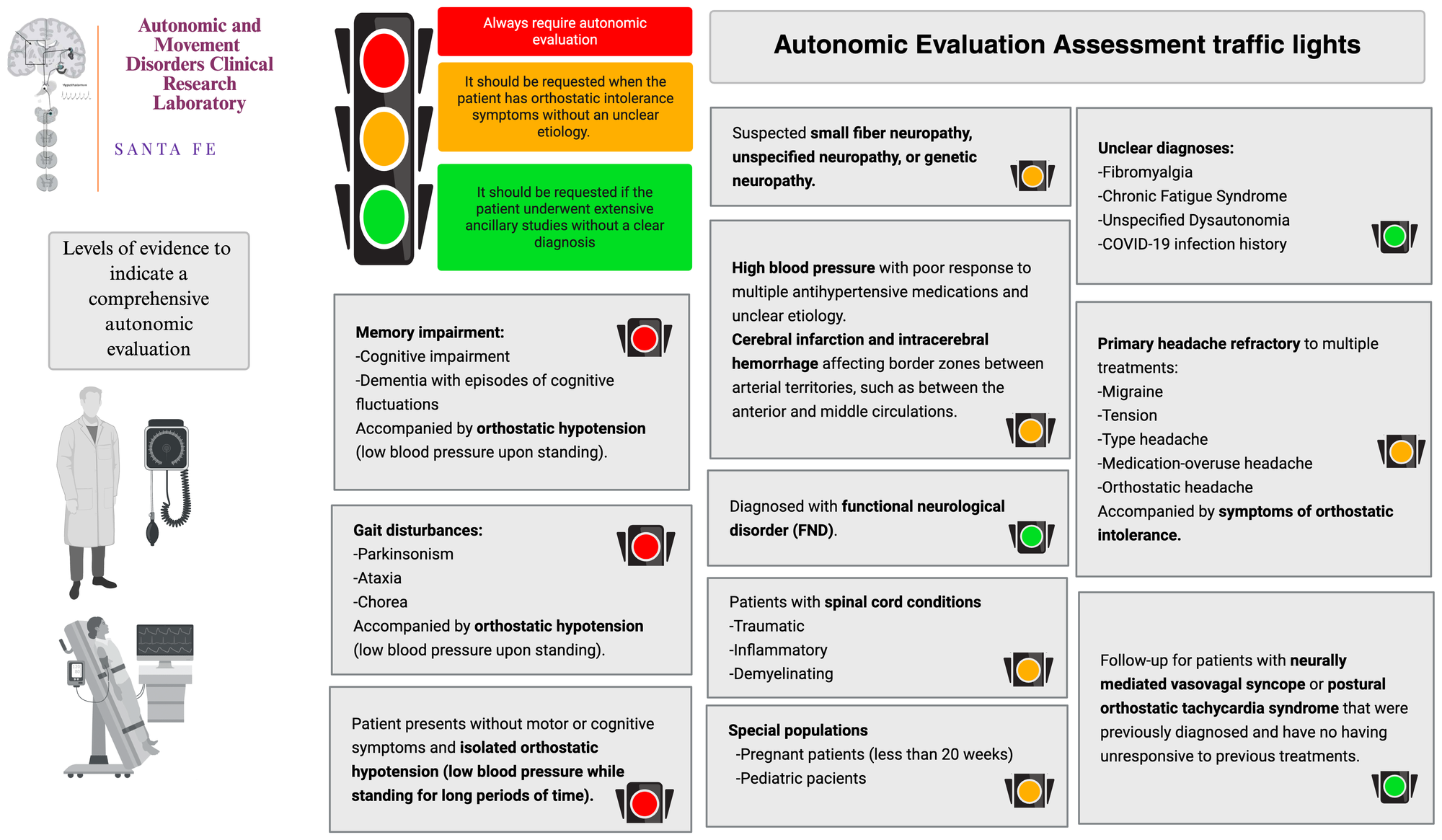
Autonomic evaluation assessment traffic lights, 2026. Santa Fe Clinical Research Laboratory.
Red
Memory impairment or gait disturbance with orthostatic hypotension, or isolated orthostatic hypotension without motor or cognitive symptoms.
Amber
Suspected small-fiber, unspecified or genetic neuropathy; resistant hypertension of unclear cause; stroke or hemorrhage in arterial border zones; spinal cord disease; special populations (pregnancy < 20 weeks, pediatrics); and refractory primary headache with orthostatic intolerance.
Green
Fibromyalgia, chronic fatigue syndrome, unspecified dysautonomia, prior COVID-19, functional neurological disorder, or follow-up of neurally mediated vasovagal syncope and POTS already diagnosed and not responding to treatment.
You will receive a clear report with the diagnosis, its implications, and recommendations. There will be a follow-up plan. When needed, we coordinate referral to allied specialists. This website is educational and does not replace a medical evaluation. Every patient needs an individualized assessment.
It is not required. If you already have notes, studies, or a letter from your physician, bring them — they shorten the path.
The first visit and functional tests usually take a morning. Exact timing depends on the studies indicated. We reserve time to listen.
We will give instructions when you book. In general we avoid a heavy meal just before the study and confirm which medicines to take or hold. Do not stop medicines on your own.
Yes. Virtual visits are useful for history, review of studies, and follow-up. Tilt-table testing, EEG, and ultrasound are done on site.
Yes. The evaluation is organized for children, adolescents, and adults, with the family in the process. Write to us so we can advise on site and preparation.
Fees and availability are confirmed when you book, according to site and type of study. We can advise by WhatsApp.
No. Chest pain, acute neurological deficit, syncope with injury, or any emergency belongs in an emergency department.