The report
The patient receives a clear report with findings, implications, and recommendations. If you are the treating physician, we can send a copy with the patient’s consent.
For colleagues
How to refer a patient, which studies we perform, and how the report is delivered. The laboratory is built for neurology, internal medicine, cardiology, rheumatology, and pediatrics.
A short note is enough: reason, medications, prior studies, and whether there is orthostatic hypotension, syncope, parkinsonism, or neuropathy.
Write to appointments or to clinical direction. WhatsApp also works to coordinate site and preparation.
A formal referral is not required. If you have one, it shortens the path.
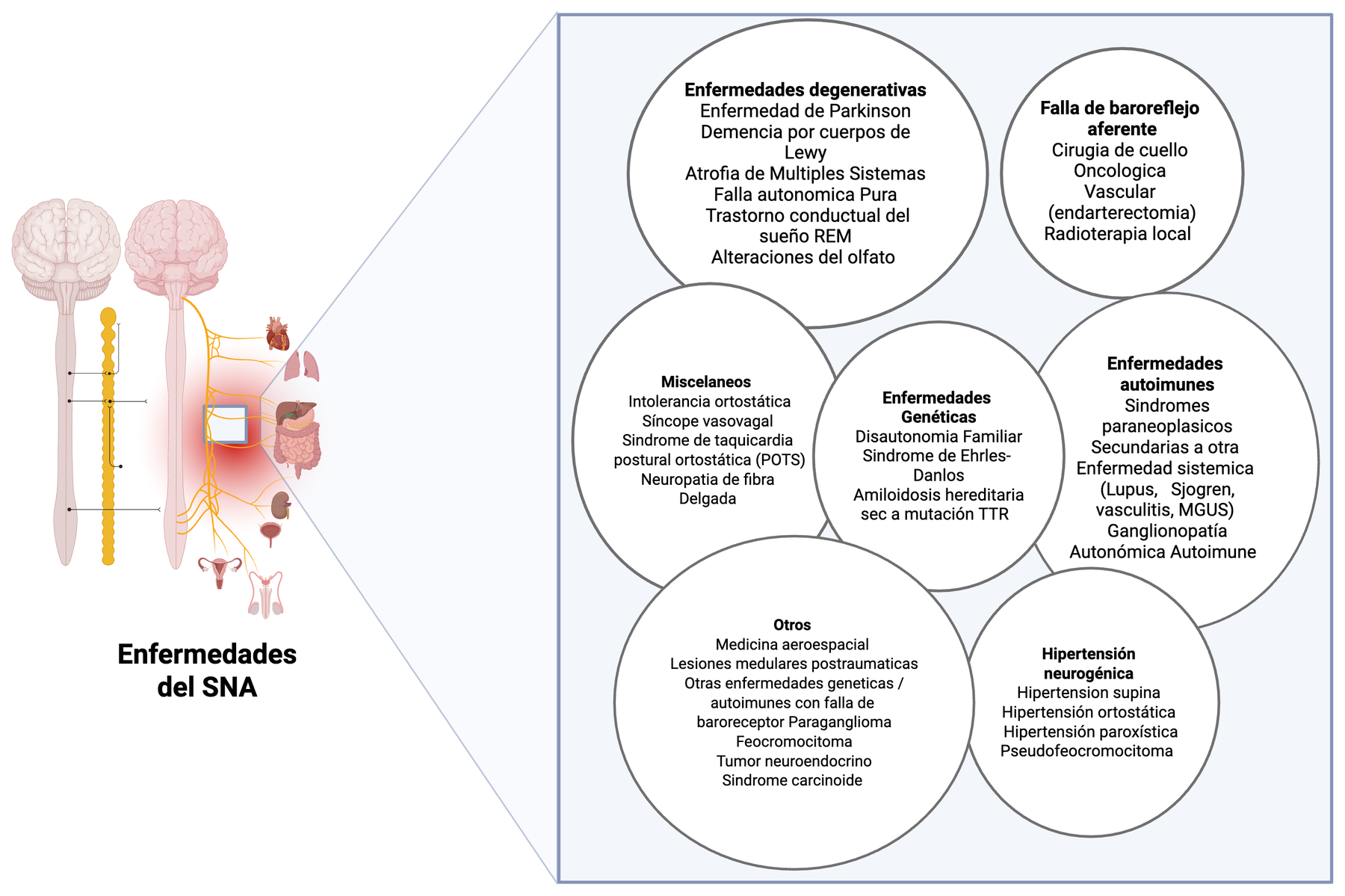
Map of autonomic nervous system diseases that guide the evaluation. Santa Fe Laboratory.
We use the laboratory’s 2026 algorithm. Red is not an emergency-department alert: it means autonomic testing is indicated from the start.
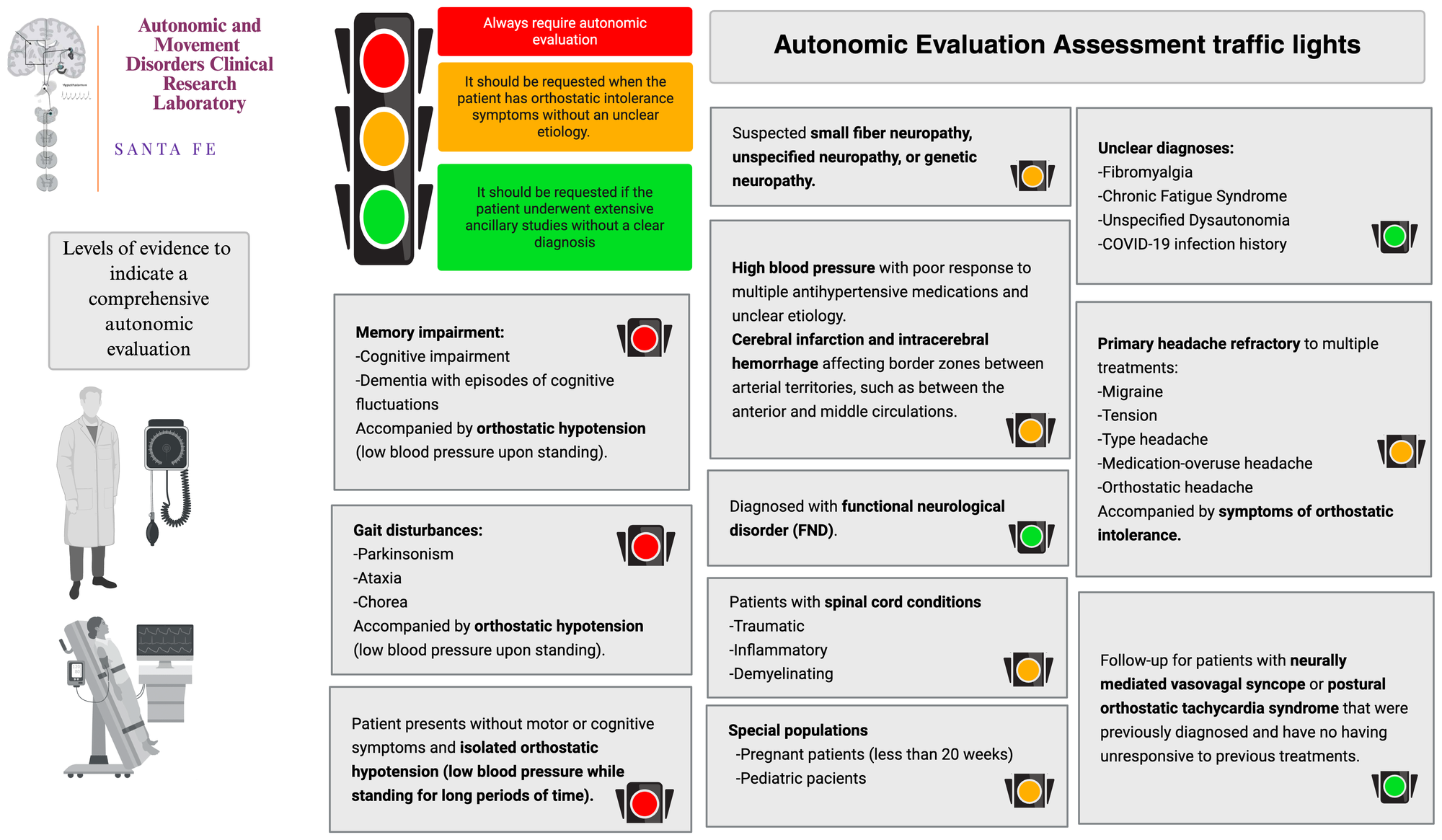
Autonomic evaluation assessment traffic lights, 2026. Santa Fe Clinical Research Laboratory.
Control: healthy 73-year-old adult
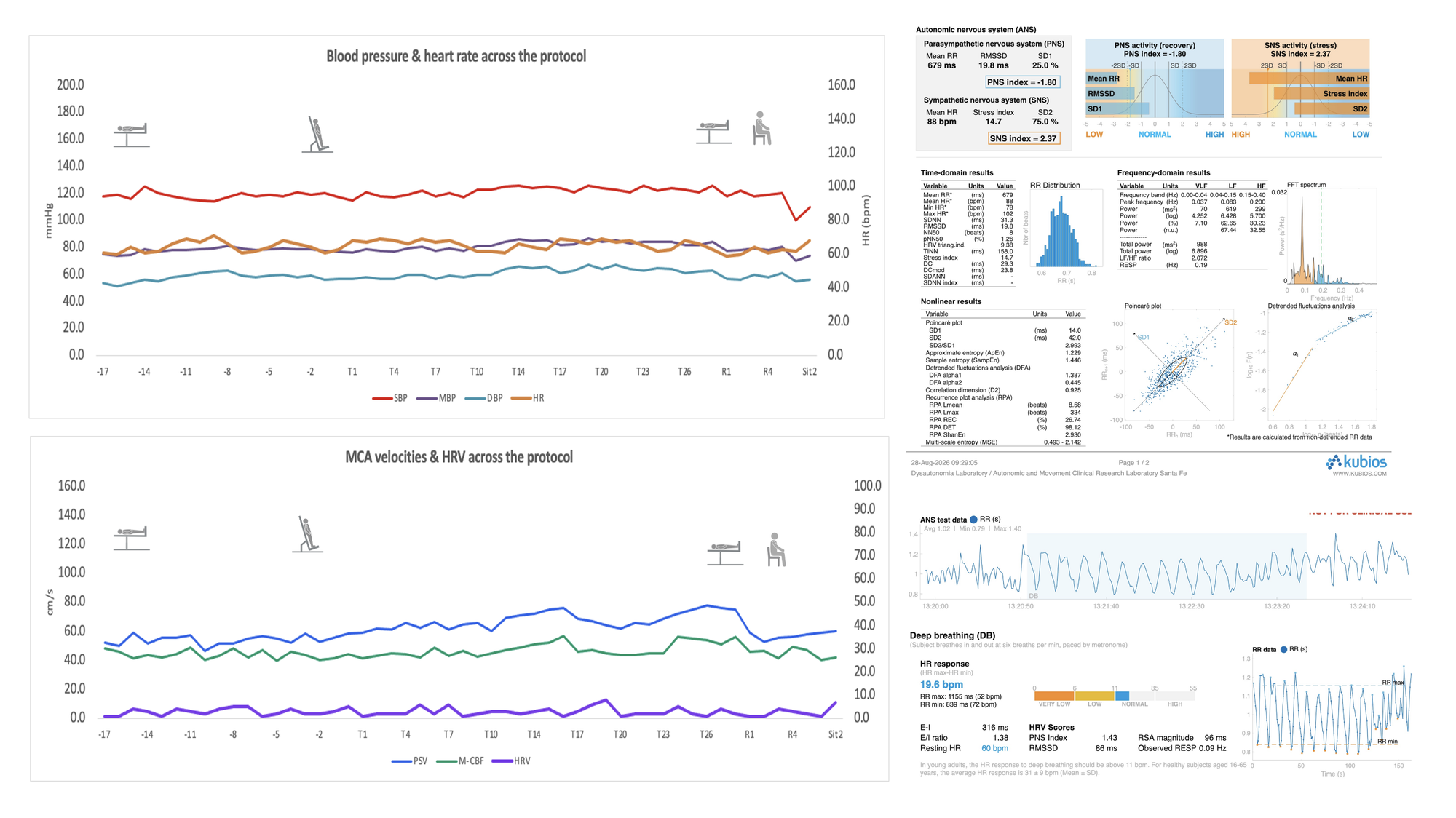
Scroll sideways to see blood pressure, pulse, cerebral flow, and HRV without cropping. Open full size
Autonomic failure: 69-year-old man
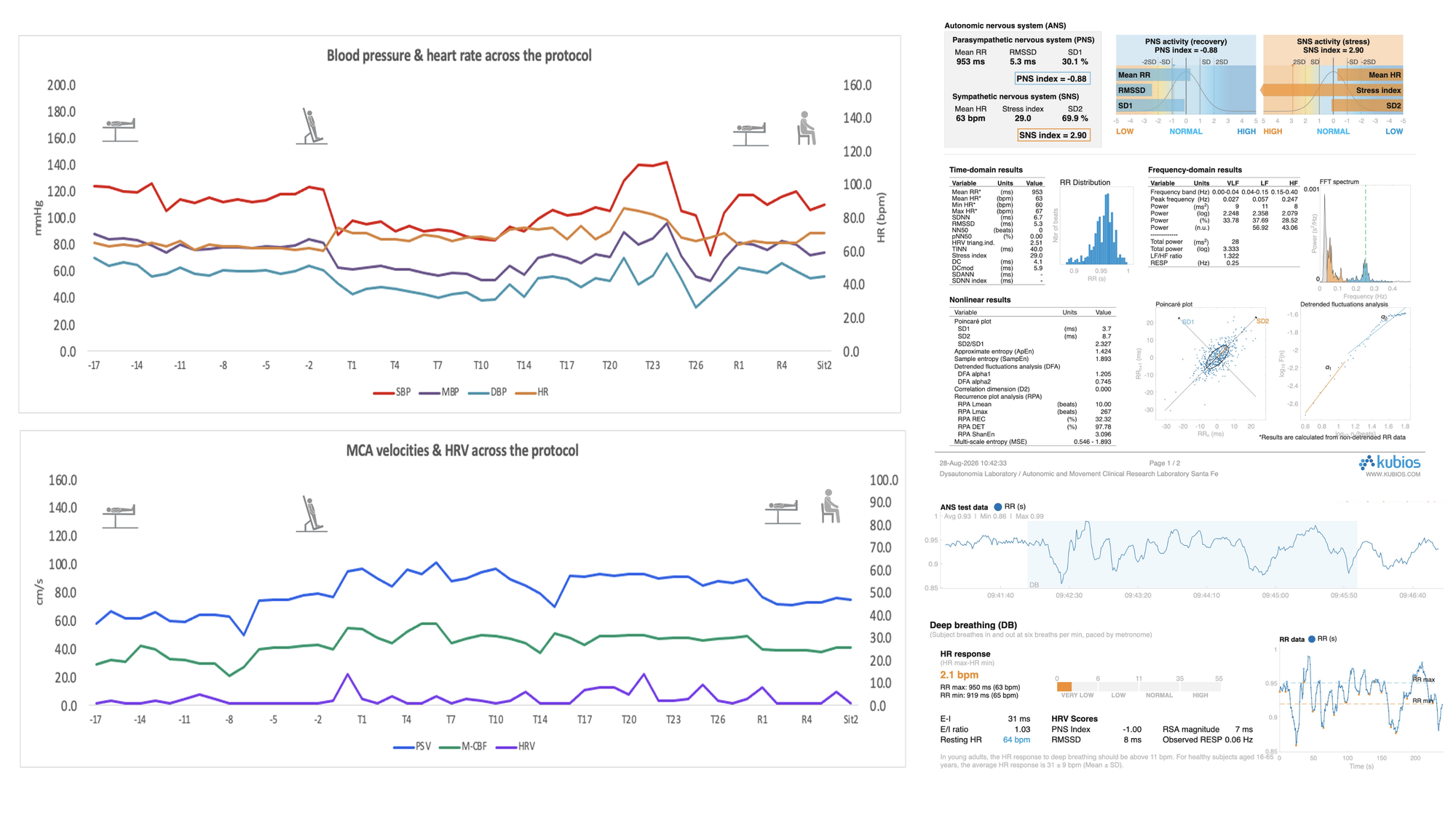
Scroll sideways to see blood pressure, pulse, cerebral flow, and HRV without cropping. Open full size
The patient receives a clear report with findings, implications, and recommendations. If you are the treating physician, we can send a copy with the patient’s consent.
The laboratory documents dysautonomia and movement-disorder phenotypes in Mexican populations. Collaborations and protocols are on ResearchGate.
ResearchGate profile